


2026 Office Colors: Transform Your Workspace with the Latest Trends
As we approach 2026, the role of color in office interiors continues to evolve, offering new opportunities to enhance productivity and creativity. The right color scheme can transform a workspace, influencing mood, focus, and even collaboration among employees. With the upcoming trends in office colors, interior designers and office managers have a fresh palette to explore. This guide delves into the latest color trends for 2026 and how they can be effectively integrated into modern office spaces.
What Are the Trending Office Colors for 2026?
The color trends for 2026 are all about creating a balance between energy and calm, innovation and tradition. This year, expect to see a blend of natural, earthy tones alongside vibrant, energizing shades. These colors are not just about aesthetics; they play a crucial role in shaping the work environment and influencing employee well-being.
Key 2026 Office Colors and Their Psychological Impacts
- Soft Sage: Calming, promotes focus
- Vibrant Coral: Stimulates creativity and energy
- Warm Terracotta: Grounding, evokes warmth
- Deep Navy: Provides a sense of stability
- Muted Mustard: Encourages optimism and clarity
The Importance of Color in Office Design
Colors in office design go beyond mere decoration; they play a vital role in creating an environment that supports productivity and well-being. The right color scheme can influence how employees feel and perform, making it a crucial element in office design. For instance, certain colors can reduce stress, increase focus, or stimulate creativity, depending on their application.
Understanding the psychological impact of colors is essential for designers and office managers who aim to create a harmonious and effective workspace. By leveraging color psychology, you can tailor environments to meet specific needs, whether it’s fostering collaboration in open spaces or enhancing concentration in individual work areas.
Incorporating 2026 Color Trends into Office Interiors
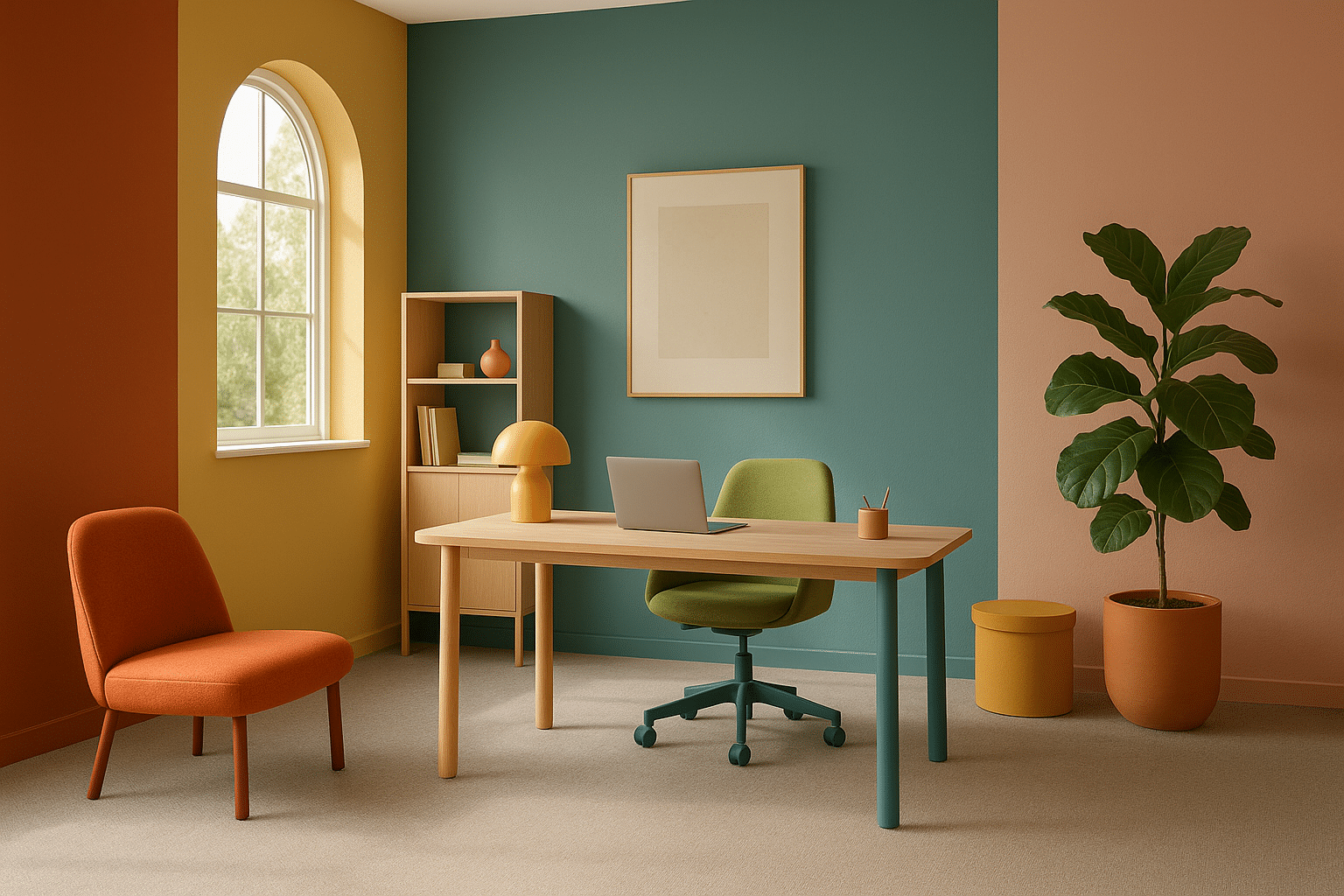
Integrating the 2026 color trends into your office doesn’t require a complete overhaul. Start by introducing these colors through accent walls, furniture, or decor items. For instance, a vibrant coral accent wall can invigorate a collaborative space, while soft sage furnishings can create a calming atmosphere in private offices.
Consider using deep navy in executive areas to convey professionalism and stability, while warm terracotta can make reception areas feel inviting and comfortable. Muted mustard, when used in open-plan offices, can add a touch of optimism and clarity, helping to boost morale and focus.
Practical Tips for Applying New Colors in Your Office
When applying new colors, balance is key. Use bold colors sparingly to avoid overwhelming the space, and pair them with neutral tones to maintain a cohesive look. Experiment with different shades and textures to add depth and interest to your interiors.
Lighting also plays a crucial role in how colors are perceived, so ensure your lighting complements the new color scheme. Natural light can enhance the vibrancy of colors, while artificial lighting might require adjustments to achieve the desired effect. Finally, involve your team in the redesign process to ensure the new environment meets everyone’s needs.
Comparison Table of 2026 Office Color Trends
| Color | Psychological Impact | Best Used In |
|---|---|---|
| Soft Sage | Calming, promotes focus | Meeting rooms, individual workspaces |
| Vibrant Coral | Stimulates creativity and energy | Common areas, collaborative spaces |
| Warm Terracotta | Grounding, evokes warmth | Reception areas, break rooms |
| Deep Navy | Provides a sense of stability | Executive offices, boardrooms |
| Muted Mustard | Encourages optimism and clarity | Open-plan offices, brainstorming areas |
Conclusion: Revitalize Your Workspace with 2026 Colors
Incorporating the 2026 office color trends into your workspace can lead to a more dynamic and inspiring environment. By understanding the psychological impacts of colors and applying them strategically, you can enhance productivity and employee satisfaction.
Remember, the goal is to create a balanced and harmonious space that reflects your company’s values and supports its goals. Start small, experiment, and enjoy the transformation as your office comes to life with the colors of 2026.
Frequently Asked Questions
How do I choose the right color for my office?
Consider the function of each space and the mood you want to create. Use calming colors like soft sage in areas where focus is needed, and vibrant colors like coral in collaborative spaces. Balance bold colors with neutrals to maintain harmony.
Can I use multiple colors in one office space?
Yes, using multiple colors can add depth and interest to your office design. However, stick to a cohesive palette to avoid visual clutter. Use one color as the dominant shade and others as accents to create a balanced look.
How often should office colors be updated?
While there’s no strict rule, updating office colors every 3-5 years can keep the workspace fresh and engaging. Regular updates also allow you to incorporate new trends and adapt to changing company needs or branding.
What if my team has different color preferences?
Involve your team in the decision-making process to gather input and ensure the new color scheme meets everyone’s needs. Consider creating different zones with varying color themes to cater to diverse preferences within the office.