
In today’s environmentally conscious world, reducing paper waste in the office is not just a trend but a necessity. Office managers and employees alike are increasingly looking for sustainable practices to implement in their daily routines. Minimizing paper waste not only contributes to environmental conservation but also enhances operational efficiency and reduces costs. This practical guide will provide you with actionable strategies to significantly cut down on paper usage in your office environment.
What are Quick Ways to Reduce Paper Waste in the Office?
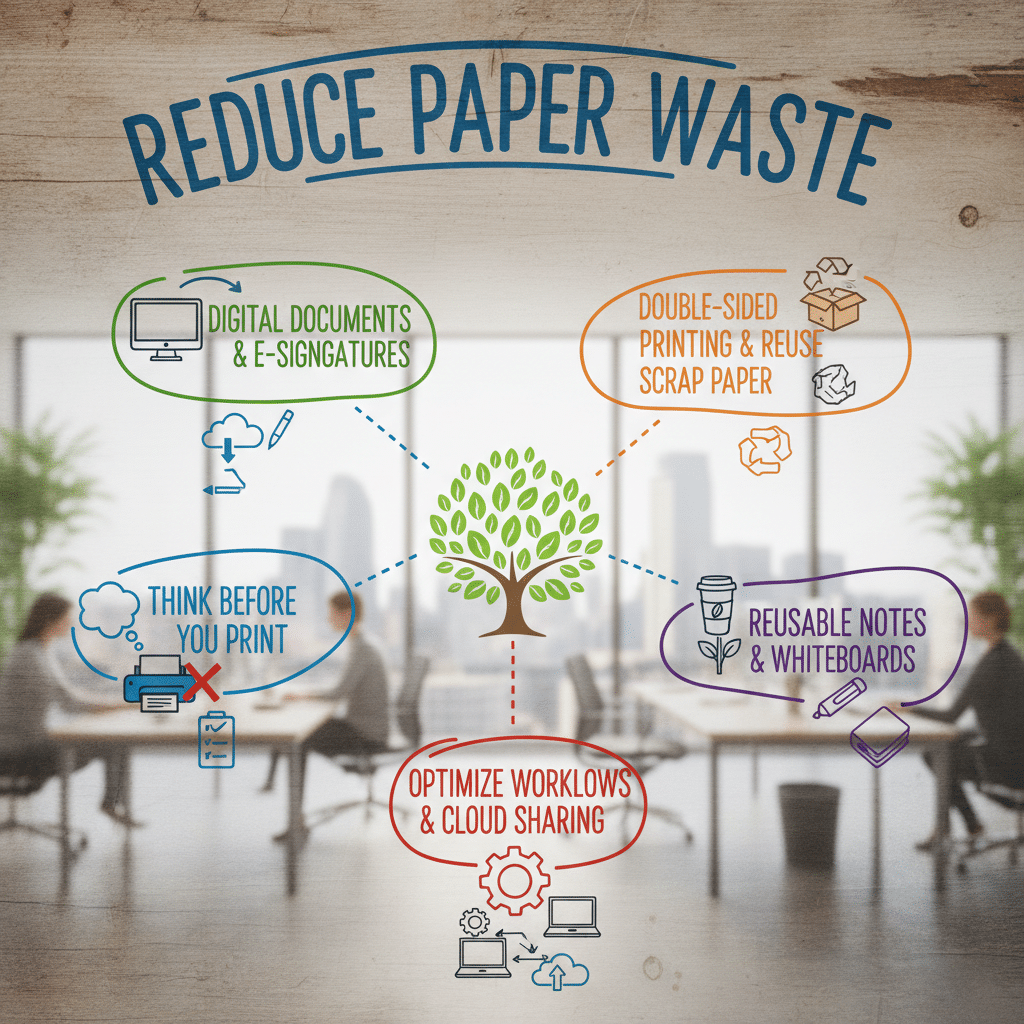
Start by evaluating current paper usage and identifying areas where paper can be reduced. Encourage double-sided printing and the use of digital documents instead of physical copies. Implement a recycling program and place recycling bins in accessible areas.
Key Steps to Minimize Paper Waste
- Conduct a paper usage audit.
- Encourage double-sided printing.
- Implement digital document management.
- Set up a comprehensive recycling program.
- Promote paperless meetings and note-taking.
- Educate employees about sustainability.
- Use paper alternatives when necessary.
- Regularly review and adjust strategies.
Conduct a Thorough Paper Usage Audit
Before implementing any changes, it’s crucial to understand the current state of paper usage in your office. Conducting a thorough audit will help identify the main areas where paper is being used excessively. This can be achieved by analyzing purchasing records, observing daily operations, and gathering feedback from employees. Understanding these patterns will provide a clear baseline from which to measure improvement, and exploring paper waste solutions can further enhance your efforts.
Once the audit is complete, categorize the findings into different sections such as printing, copying, and note-taking. This will allow you to prioritize areas that need immediate attention. Use this data to set realistic paper reduction goals and track progress over time, ensuring that the efforts are yielding tangible results. To enhance your approach, Explore paper reduction strategies.

Viking Shredder 12 Sheets Cross Cut Security Level P-3 25 L OS1201D

Viking Shredder 18 Sheets Cross Cut Security Level P-4 28 L OS1801CI

Viking Auto Feed Shredder 120 Sheets Micro Cut Security Level P-4 23 L C233-B

Viking Shredder 10 Sheets Cross Cut Security Level P-4 10 L OS1006C

Viking Shredder 9 Sheets Micro Cut Security Level P-5 20 L OS901Mi
Implement Digital Solutions
One of the most effective ways to reduce paper waste is to transition to digital solutions. Encourage the use of electronic documents and cloud-based storage systems, which not only cut down on paper usage but also enhance accessibility and collaboration. Tools like digital signatures and online forms can replace traditional paper-based processes, making workflows more efficient.
Moreover, adopting digital communication platforms can significantly reduce the need for printed memos and announcements. By fostering a digital-first mindset, offices can not only minimize paper waste but also improve overall productivity. Regular training sessions can help employees adapt to these new tools and maximize their potential.
Comparison Table of Paper Reduction Strategies
| Strategy | Ease of Implementation | Cost | Impact |
|---|---|---|---|
| Double-sided Printing | Easy | Low | High |
| Digital Documents | Moderate | Medium | High |
| Recycling Program | Easy | Low | Medium |
| Paperless Meetings | Moderate | Low | High |
| Employee Education | Moderate | Medium | High |
Promote a Culture of Sustainability
Creating a culture of sustainability within the office is essential for long-term success in reducing paper waste. This involves educating employees about the environmental impact of paper waste and the benefits of sustainable practices. Regular workshops and seminars can keep sustainability at the forefront of everyone’s mind and encourage consistent behavior change.
In addition to education, recognize and reward teams or individuals who actively contribute to reducing paper waste. This could be through incentive programs or public acknowledgment. By integrating sustainability into the office culture, employees are more likely to embrace and adhere to paper reduction strategies, leading to lasting change.
Conclusion: Embrace Sustainability for a Greener Office
Reducing paper waste in the office is a manageable and impactful way to contribute to environmental sustainability. By implementing the strategies outlined in this guide, offices can significantly decrease their paper usage while enhancing efficiency and reducing costs.
Remember, the key to success lies in consistent effort and the active involvement of all team members. As these practices become ingrained in the office culture, the benefits will extend beyond environmental impact, fostering a more innovative and forward-thinking workplace.
Frequently Asked Questions
How can I encourage employees to reduce paper usage?
Encouraging employees to reduce paper usage can be achieved by setting clear goals, providing training on digital tools, and recognizing efforts. Create an open dialogue about the importance of sustainability and involve employees in decision-making processes to foster a sense of ownership and responsibility.
What are some alternatives to traditional paper products?
Consider using recycled paper, bamboo paper products, or tree-free paper made from agricultural residues. These alternatives often have a lower environmental impact and can be integrated into office operations with minimal disruption. Additionally, explore digital solutions to replace paper-based processes.
How can I measure the success of paper reduction initiatives?
Success can be measured by tracking paper purchasing trends, monitoring recycling rates, and conducting regular audits of paper usage. Set specific, measurable goals and review progress periodically. Employee feedback and engagement levels can also provide insights into the effectiveness of the initiatives.
Is going completely paperless a realistic goal for offices?
While going completely paperless may not be feasible for all offices, significant reductions in paper usage are achievable. Focus on transitioning high-volume paper processes to digital platforms and gradually reduce reliance on paper. Flexibility and adaptability are key to finding a balance that suits your office’s needs.