When it comes to choosing a whiteboard for your office or classroom, understanding the differences between magnetic and non-magnetic whiteboards is crucial. Each type offers unique features and benefits that can significantly impact your decision-making process. By exploring these differences, you can ensure that you select the right whiteboard to meet your specific needs and enhance productivity in your environment.
What Are the Key Differences Between Magnetic and Non-Magnetic Whiteboards?
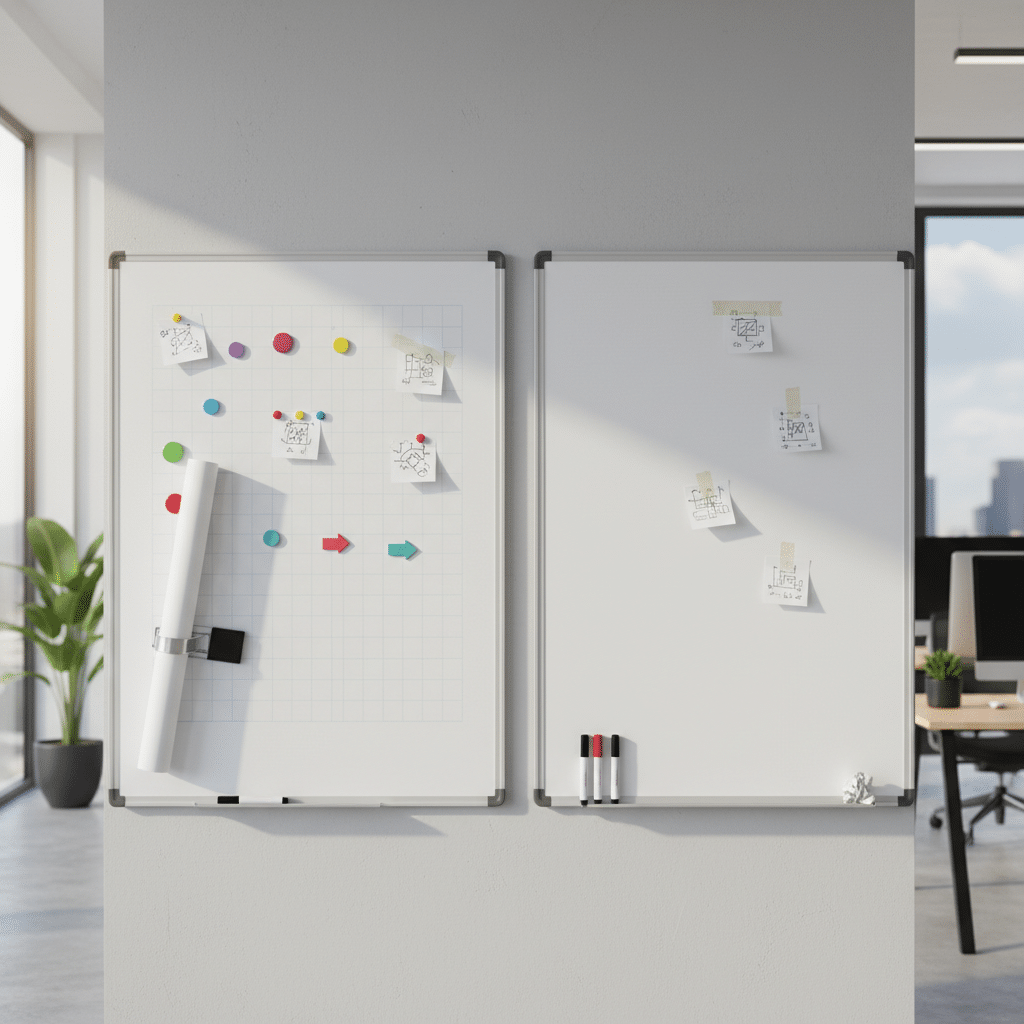
Magnetic whiteboards have a metallic surface that allows magnets to stick, making them versatile for attaching notes and documents. Non-magnetic whiteboards, on the other hand, are typically made of melamine or laminate and do not support magnets. Both types serve as excellent writing surfaces, but their additional functionalities and durability set them apart. To learn more about their benefits, Explore magnetic whiteboards.
Distinct Features of Magnetic and Non-Magnetic Whiteboards
- Magnetic whiteboards support magnets for added functionality.
- Non-magnetic whiteboards are generally more affordable.
- Magnetic boards offer greater durability and longevity.
- Non-magnetic boards are lightweight and easy to install.
- Magnetic boards are ideal for collaborative environments.
- Non-magnetic boards suit personal or temporary setups.
- Both types provide smooth writing surfaces.
Exploring Magnetic Whiteboards
Magnetic whiteboards are a popular choice in professional and educational settings due to their versatility and durability. The steel or porcelain surface not only provides a smooth writing experience but also allows users to attach magnets, making it easy to display documents, notes, and reminders. This dual functionality makes magnetic whiteboards ideal for collaborative environments where information needs to be shared and updated frequently.
In terms of durability, magnetic whiteboards are known for their long-lasting surfaces that resist stains and ghosting. This makes them a cost-effective option over time, despite their higher initial cost. They are particularly beneficial in environments where the board will be used extensively, such as classrooms and busy offices. The ability to easily clean and maintain the surface ensures that these boards remain looking professional for years to come.


Viking Whiteboard Wall Mounted Magnetic Lacquered Steel Single Sided 120 (W) x 90 (H) cm

Viking Whiteboard Wall Mounted Magnetic Lacquered Steel Single Sided 90 (W) x 60 (H) cm

Viking Whiteboard Wall Mounted Magnetic Lacquered Steel Single Sided 150 (W) x 100 (H) cm

Viking Whiteboard Wall Mounted Non Magnetic Melamine Single Sided 60 (W) x 90 (H) cm

Monthly Magnetic Whiteboard Magnetic Corner fixing 90 (W) x 60 (H) cm Metal White
Understanding Non-Magnetic Whiteboards
Non-magnetic whiteboards, often made from melamine or laminate, provide a budget-friendly option for those who require a simple writing surface. While they lack the ability to hold magnets, they are lightweight and easy to install, making them suitable for personal use or temporary setups. Their affordability makes them an attractive choice for home offices or environments where the board will not be used as intensively.
Although non-magnetic whiteboards may not offer the same level of durability as their magnetic counterparts, they still provide a smooth surface for writing and erasing. They are ideal for situations where the board will be used for short-term projects or in spaces where budget constraints are a significant consideration. Regular maintenance can help extend the life of a non-magnetic whiteboard, ensuring it remains a useful tool in any setting.
Comparison Table of Magnetic and Non-Magnetic Whiteboards
| Feature | Magnetic Whiteboards | Non-Magnetic Whiteboards |
|---|---|---|
| Surface Material | Steel or Porcelain | Melamine or Laminate |
| Magnet Compatibility | Yes | No |
| Durability | High | Moderate |
| Cost | Higher | Lower |
| Ideal Use | Office, Classroom | Home, Temporary Use |
Choosing the Right Whiteboard for Your Needs
Deciding between a magnetic and non-magnetic whiteboard depends on your specific needs and the environment in which the board will be used. For those who require a multifunctional tool that can handle frequent updates and document displays, a magnetic whiteboard is the superior choice. Its durability and ease of use make it well-suited for busy offices and classrooms where collaboration and communication are key.
On the other hand, if budget constraints are a priority and the board will be used in a less demanding environment, a non-magnetic whiteboard may be the better option. Its affordability and simplicity make it perfect for personal use or temporary installations. Ultimately, understanding the distinct features and benefits of each type will guide you in making an informed decision that aligns with your specific requirements.
Conclusion: Making an Informed Choice
Choosing between a magnetic and non-magnetic whiteboard involves considering factors such as budget, usage frequency, and the need for additional functionalities. Magnetic whiteboards offer versatility and durability, making them ideal for collaborative settings, while non-magnetic boards provide an economical solution for less intensive use.
By understanding the unique features and benefits of each type, you can select the whiteboard that best suits your needs. For further assistance in making your decision, explore the wide range of options available at Viking Direct’s whiteboards page.
Frequently Asked Questions
Can I use magnets on a non-magnetic whiteboard?
No, non-magnetic whiteboards do not have the metallic surface required to hold magnets. They are typically made from materials like melamine or laminate, which do not support magnetic properties. If you need to use magnets, consider purchasing a magnetic whiteboard instead.
How do I maintain a magnetic whiteboard?
To maintain a magnetic whiteboard, regularly clean the surface with a soft cloth and a gentle cleaning solution designed for whiteboards. Avoid using abrasive materials that can scratch the surface. For stubborn stains or ghosting, specialized whiteboard cleaners can help restore the board’s appearance.
Are non-magnetic whiteboards suitable for heavy use?
Non-magnetic whiteboards are generally not recommended for heavy use due to their lower durability compared to magnetic whiteboards. They are more suitable for personal or temporary use where the board will not be subject to constant writing and erasing. For heavy use, a magnetic whiteboard is a better option.
What are the cost differences between magnetic and non-magnetic whiteboards?
Magnetic whiteboards tend to be more expensive due to their durable materials and additional functionality. Non-magnetic whiteboards are more budget-friendly, making them an attractive choice for those with cost constraints. Consider your specific needs and budget when deciding between the two options.