
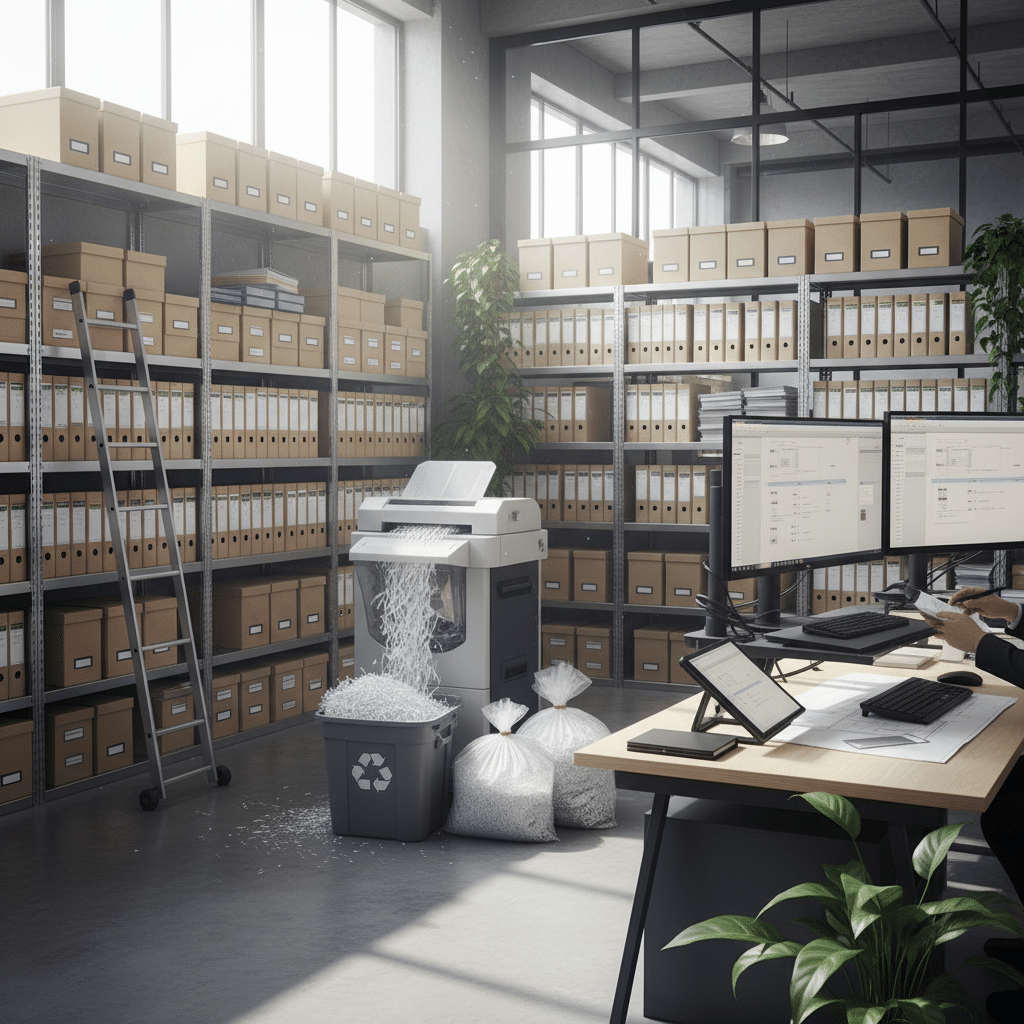
In today’s fast-paced business environment, effective document management is crucial for maintaining efficiency and ensuring security. Office managers and administrative professionals are often tasked with deciding the best way to handle a plethora of documents. Whether it’s preserving important records, ensuring compliance, or enhancing accessibility, the choice between archiving, shredding, and digitizing documents can significantly impact an organization’s workflow and data security.
What Are the Immediate Benefits of Archiving, Shredding, or Digitizing?
Each document management method offers unique advantages that can cater to different organizational needs, including various document management solutions:
Key Advantages and Drawbacks of Each Method
- Archiving: Preserves documents, but requires physical space and can be costly over time.
- Shredding: Ensures security by destroying documents, but is not reversible.
- Digitizing: Saves space and enhances accessibility, but may involve initial setup costs.
- Archiving: Ideal for compliance and legal requirements, but retrieval can be time-consuming.
- Shredding: Environmentally friendly options available, but requires regular maintenance.
- Digitizing: Reduces paper clutter, but relies on digital security measures.
Archiving: Preserving Important Records
Archiving is the process of storing documents in a secure and organized manner for long-term use. This method is particularly beneficial for legal and compliance documents that need to be retained for several years. By using Archiving Solutions, businesses can ensure that important information is preserved and easily accessible when needed.
However, archiving can require significant physical space and may involve ongoing costs for storage solutions. Companies like Viking Direct offer a variety of archive storage options to help streamline this process. It’s important to regularly review archived documents to determine if they are still needed, as this can help manage storage space effectively.


Viking Shredder 12 Sheets Cross Cut Security Level P-3 25 L OS1201D

Viking Shredder 18 Sheets Cross Cut Security Level P-4 28 L OS1801CI

Viking Auto Feed Shredder 120 Sheets Micro Cut Security Level P-4 23 L C233-B

Viking Shredder 10 Sheets Cross Cut Security Level P-4 10 L OS1006C

Viking Shredder 9 Sheets Micro Cut Security Level P-5 20 L OS901Mi
Shredding: Ensuring Secure Disposal
Shredding is a vital component of document management, especially for sensitive information that is no longer needed. By shredding documents, businesses can protect themselves from data breaches and identity theft. This method is particularly important for documents containing personal or confidential information.
While shredding is an effective way to dispose of documents securely, it is irreversible. Therefore, it’s crucial to ensure that only documents that are no longer needed are shredded. Office shredders, available from suppliers like Viking Direct, come in various sizes and capacities to suit different business needs, ensuring efficient and secure document disposal.
Comparison Table of Document Management Methods
| Method | Cost | Security | Space Saving |
|---|---|---|---|
| Archiving | Moderate | High | Low |
| Shredding | Low | Very High | Moderate |
| Digitizing | Variable | High | Very High |
Digitizing: Enhancing Accessibility and Efficiency
Digitizing documents involves converting paper records into digital files, which can significantly enhance accessibility and efficiency. This method allows for quick retrieval and sharing of information, reducing the time spent searching for physical documents. Additionally, digitizing helps save physical space, as digital storage requires far less room than paper archives.
However, digitizing documents requires an initial investment in technology and may involve ongoing costs for digital storage solutions. It also necessitates robust digital security measures to protect sensitive information. Despite these considerations, digitizing is a forward-thinking approach that aligns with the growing trend towards paperless offices.
Conclusion: Best Practices for Document Management
Effective document management is critical for maintaining organizational efficiency and security. By understanding the benefits and limitations of archiving, shredding, and digitizing, office managers can make informed decisions that align with their business needs.
Consider integrating multiple methods to create a robust document management strategy that enhances accessibility, ensures compliance, and protects sensitive information. Regularly review and update your approach to adapt to evolving business environments and technological advancements.
Frequently Asked Questions
What factors should I consider when choosing a document management method?
When selecting a document management method, consider the nature of the documents, regulatory requirements, available resources, and the specific needs of your organization. Assess whether you need long-term storage, secure disposal, or enhanced accessibility, and opt for a combination of methods if necessary.
How can I ensure the security of digitized documents?
To ensure the security of digitized documents, implement strong digital security measures such as encryption, access controls, and regular backups. Train employees on data protection best practices and regularly update security software to protect against cyber threats. Consider using cloud-based solutions that offer robust security features.
Is shredding environmentally friendly?
Yes, shredding can be environmentally friendly if done correctly. Many shredding services recycle shredded paper, reducing waste and promoting sustainability. When choosing a shredding service or equipment, look for options that prioritize eco-friendly practices, such as recycling and energy-efficient machinery.


